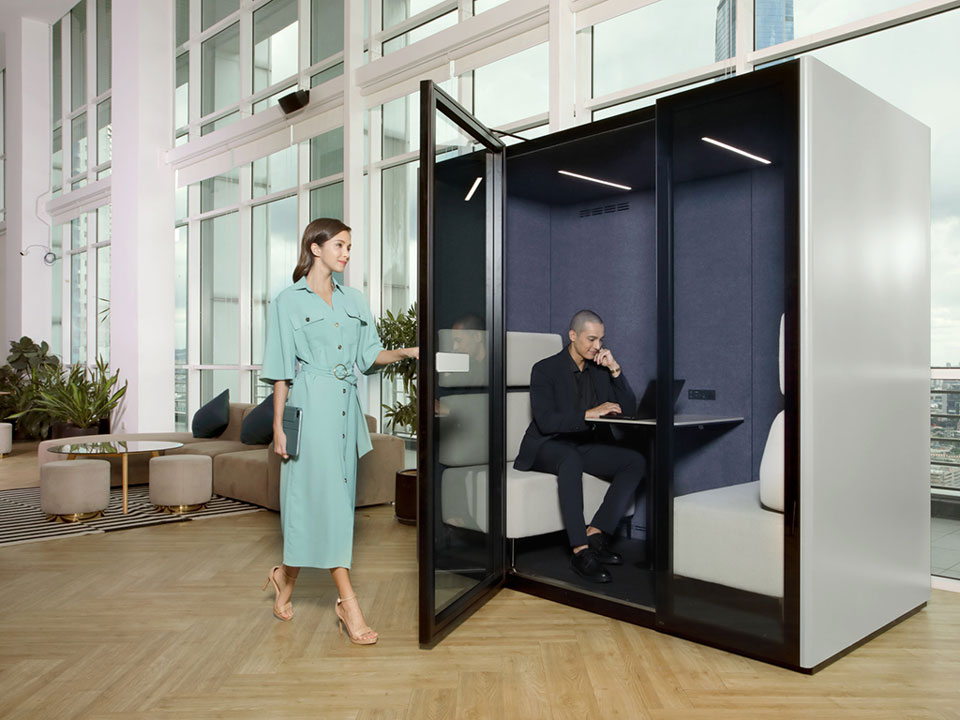
Open plan offices promised collaboration and flexibility, but many businesses quickly discovered an unexpected challenge: noise. The constant chatter, phone calls, keyboard clicks, and foot traffic create a cacophony that affects concentration and productivity. Acoustic office pods offer a practical solution to this widespread problem, providing quiet spaces within bustling work environments.
These specialised structures act as sound sanctuaries, giving employees respite from the auditory chaos of modern workplaces. Whether you need a private phone booth for confidential calls or a meeting space where teams can discuss projects without disturbing others, acoustic pods deliver effective noise reduction whilst maintaining the open office aesthetic.
Understanding the Noise Problem in Open Offices
The shift towards open plan layouts created unforeseen acoustic challenges. Office noise levels frequently exceed comfortable thresholds during working hours, often reaching levels comparable to a busy restaurant. Workers report that noise ranks among their top workplace complaints, directly impacting their ability to concentrate on complex tasks.
The human brain processes sound continuously, even when we try to ignore it, leading to what acoustics specialists call “cognitive overload.” This constant background processing reduces mental capacity available for primary work tasks.
Traditional office design relied on physical barriers like walls and doors to control sound transmission. Open offices removed these barriers in favour of visual connection and space efficiency, but inadvertently eliminated natural sound control mechanisms. The result is an environment where every conversation becomes background noise for everyone else.
How Acoustic Office Pods Address Sound Challenges
Acoustic office pods function as miniature rooms designed specifically for sound control. These structures use multiple layers of sound-absorbing and sound-blocking materials to create noticeable noise reduction both ways – keeping external sounds out whilst containing internal conversations.
The science behind acoustic pods involves two key principles: absorption and isolation. Sound absorption materials, typically high-density foam or fabric panels, convert sound energy into small amounts of heat, reducing reverberation within the pod. Sound isolation involves physical barriers that prevent sound transmission through walls, floors, and ceilings.
Quality acoustic pods provide significant sound reduction, creating peaceful environments within busy workplaces. This allows normal conversation levels inside the pod without disturbing nearby colleagues, maintaining comfort and privacy.
The positioning of acoustic office pods within the workspace also plays a crucial role in their effectiveness. Strategic placement away from high-traffic areas and sound sources such as printers or air conditioning units enhances performance. Some businesses create pod clusters in designated quiet zones, whilst others distribute individual units throughout the office floor.
Materials and Construction That Make the Difference
The effectiveness of acoustic office pods depends heavily on their construction materials and assembly methods. High-performance pods typically feature multiple wall layers with different acoustic properties. The outer shell often uses dense materials such as engineered wood or metal composites that block sound transmission.
Interior surfaces incorporate specialised acoustic fabrics and foam designed to absorb sound waves across a wide frequency range. Many pods include perforated panels behind fabric coverings, creating air gaps that enhance sound absorption and reduce reverberation.
Flooring systems in acoustic pods require special attention to prevent sound transmission through vibration. Quality pods feature isolated floor systems that decouple from the main building structure, preventing footsteps and movement from creating noise transfer. Some designs include additional carpet or acoustic underlay for enhanced sound control.
Ventilation presents another acoustic challenge, as air circulation systems can become pathways for sound transmission. Well-designed acoustic office pods include quiet ventilation fans with sound baffles that maintain air quality without compromising acoustic performance. These systems operate quietly, ensuring they don’t interfere with the pod’s tranquil environment.
Measuring Acoustic Performance
Understanding acoustic ratings helps businesses select pods that meet their specific noise control requirements. Measurements such as Sound Transmission Class (STC) and Noise Reduction Coefficient (NRC) provide insight into how well a pod performs, though real-world results also depend on installation quality and surrounding office acoustics.
Properly fitted pods, complete with effective door seals and quality materials, can deliver substantial reductions in noise transmission. Professional acoustic testing by manufacturers ensures these products meet recognised industry standards for sound control, providing peace of mind that they’ll perform as expected in everyday use.
Productivity Benefits of Reduced Noise Levels
The productivity improvements from acoustic office pods extend beyond simple noise reduction. Lack of speech privacy remains one of the biggest complaints among open office workers, with many reporting that noise negatively affects their work performance.
Cognitive research demonstrates that human concentration improves significantly in environments with consistent, low-level background noise compared to spaces with intermittent loud sounds. Acoustic pods create these optimal conditions, allowing workers to enter “flow states” where deep focus becomes possible.
Phone conversations represent a particular productivity challenge in open offices. Acoustic office pods designed for calls allow employees to speak at normal volume levels without worrying about disturbing colleagues or compromising confidential information. This reduces the stress associated with finding private spaces for important conversations.
Meeting effectiveness also improves within acoustic pods. Teams can discuss projects, brainstorm solutions, and make decisions without the constant distraction of background office noise. The contained environment encourages more open communication, as participants don’t need to compete with external sounds or worry about being overheard.
Design Options and Workplace Integration
Modern acoustic office pods come in numerous configurations to suit different workplace needs and aesthetic preferences. Single-person phone booths provide private spaces for calls and video conferences, typically measuring 1–2 square metres with enough room for a small desk and chair.
Multi-person meeting pods accommodate 2–6 people for collaborative work sessions. These larger units often include built-in technology such as power outlets, USB charging ports, and mounted displays for presentations. Some designs feature writable interior surfaces that function as whiteboards for brainstorming sessions.
Aesthetic integration with existing office design has become increasingly important as acoustic pods evolved from purely functional structures to design elements that complement workplace environments. Contemporary pods feature clean lines, premium materials, and customisable colour options that align with corporate branding and interior design schemes.
Modular acoustic pod systems offer flexibility for growing businesses or changing space requirements. These designs allow companies to reconfigure their quiet spaces as needs evolve, whilst some systems include expandable components that can create larger enclosed areas when required.
Installation and Space Considerations
Most acoustic office pods require minimal installation compared to traditional construction methods for creating private spaces. Free-standing designs can be positioned and relocated without structural modifications to the building, making them suitable for leased office spaces where permanent alterations aren’t permitted.
Space planning for acoustic pods involves considering both the pod footprint and circulation requirements around each unit. Building regulations typically require clear walkways around enclosed structures, whilst fire safety codes may specify maximum distances between pods and emergency exits.
Electrical requirements vary depending on pod features, but most units need standard power connections for lighting, ventilation, and technology integration. Some acoustic office pods include integrated power systems that connect to overhead electrical feeds, reducing floor-level cable management requirements.
Floor loading considerations become important for larger multi-person pods, particularly on raised access floors common in modern office buildings. Quality pod manufacturers provide structural engineering specifications to ensure proper weight distribution and floor system compatibility.
The investment in acoustic office pods pays dividends through improved employee satisfaction and productivity, whilst providing flexible solutions to open office noise challenges. These sound solutions create the quiet spaces modern workplaces need without the cost and complexity of permanent construction, making them practical choices for businesses seeking immediate improvements to their work environments.
With proper selection based on acoustic performance requirements and thoughtful integration into existing office layouts, acoustic pods transform noisy open plan offices into balanced environments that support both collaboration and concentrated work. The result is a workplace that delivers the benefits of open design whilst addressing the sound control needs that support employee wellbeing and performance.